
Linhas de Montagem de Rodas
A Schenck fornece equipamentos para a fabricação e o teste de rodas.
Seja para uma única máquina ou para um sistema completo totalmente automatizado, a Schenck otimiza sua linha de montagem de rodas com soluções altamente especializadas para cada linha de produção e transforma suas especificações em soluções personalizadas e de alto desempenho.
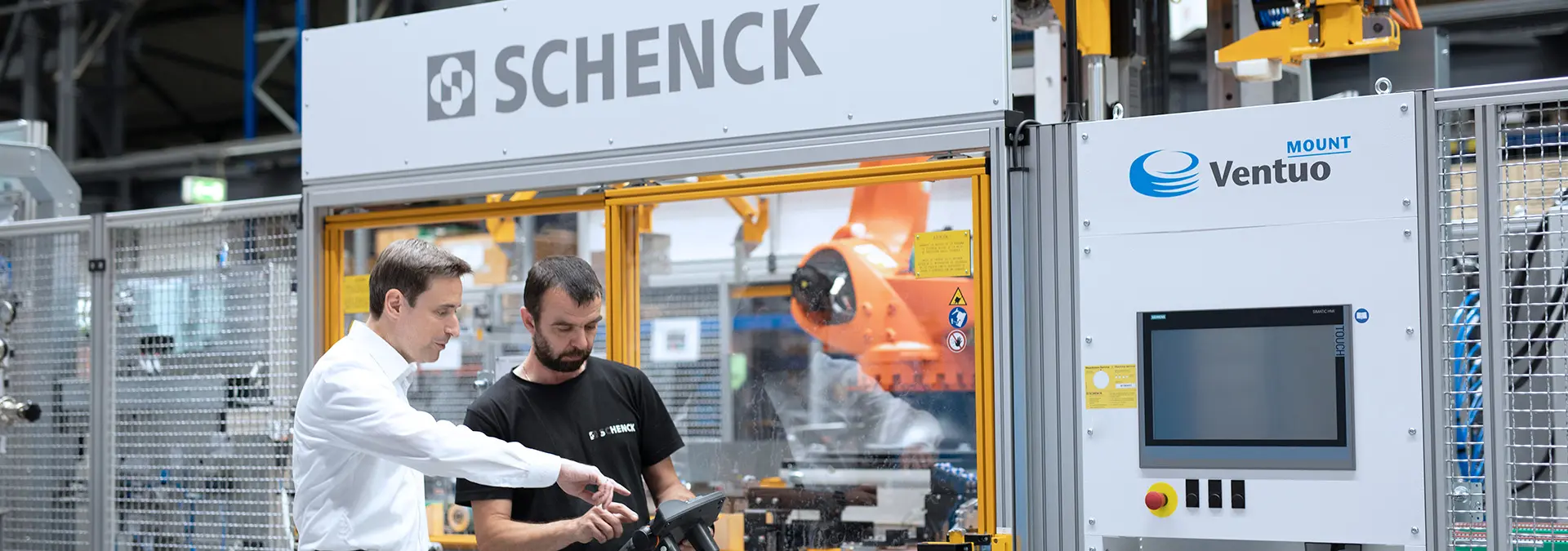
Puro desempenho para a montagem e teste de rodas completas
Linhas de montagem de rodas para cada requisito As linhas de montagem de rodas da Schenck garantem montagem e teste altamente eficientes de rodas completas graças à sua alta precisão e tecnologia inovadora. De soluções semiautomáticas e totalmente automáticas a soluções assistidas por robô, implementamos suas especificações de produção em vários estágios de expansão e da forma ideal para você.
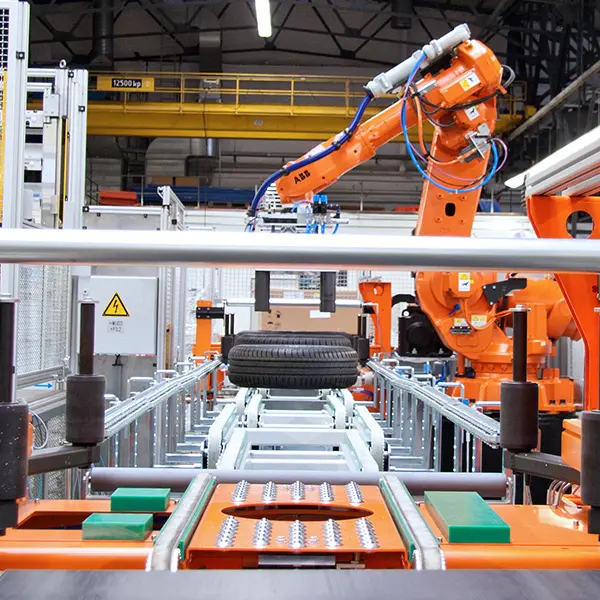
Eficiência personalizada por meio de sistemas individuais poderosos Nossas máquinas modulares de roda e pneu podem ser integradas em uma linha de montagem de rodas e também usadas como um sistema independente para expandir as instalações de produção existentes. Desde o processo central de montagem, enchimento de pressão e balanceamento para pequenas a médias quantidades, até soluções de alto desempenho para máxima flexibilidade com vários processos de teste, otimização de rodas e tempos de ciclo especificamente curtos, a Schenck oferece suporte ideal para cada etapa do caminho até a roda completa pronta.
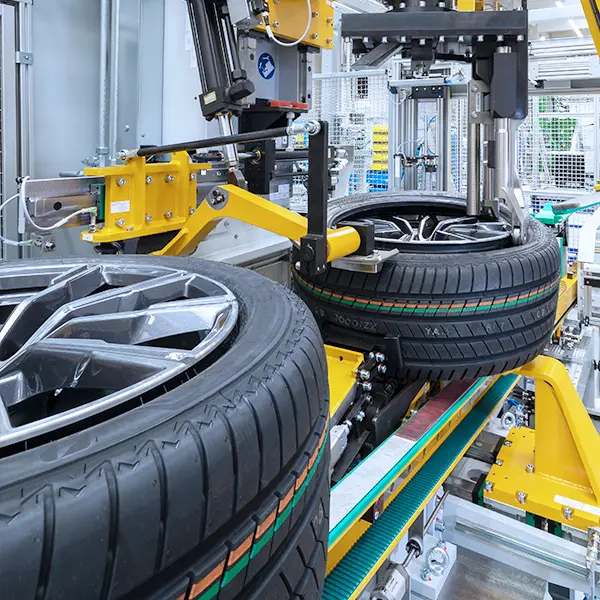
A solução certa para cada requisito Apoiamos sua montagem completa de rodas com máquinas individuais ou sistemas completos totalmente automatizados. Nossas soluções incluem montagem automática de válvulas, montagem automática de pneus em aros com correspondência, enchimento com pressão de ar e otimização do encaixe do pneu no aro. Oferecemos medição de desbalanceamento dinâmico, compensação de desbalanceamento manual ou totalmente automática e leitura de códigos DOT e reconhecimento de designer. Também fornecemos a integração de máquinas de medição de uniformidade de rodas (Uniformidade) para sistemas completos de montagem.
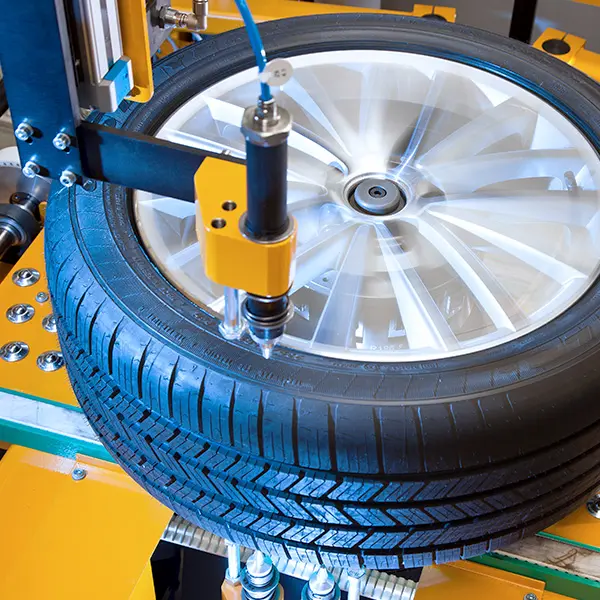
Vantagens das nossas máquinas para sua roda completa
Ampla gama de rodas
Machines for tires from 14” to 25” and all rim designs
Tempo de ciclo curto
Tempos de ciclo curtos graças à alta eficiência, seja manual, semiautomático ou totalmente automático
Precisão impressionante
Rodas completas de alta precisão e totalmente fabricadas: de peças individuais a rodas inteiras
Máxima flexibilidade
Soluções para cada requisito e cada tamanho de pneu – semiautomático ou totalmente automático, máquina individual ou sistema de roda completa
Eficiente em manutenção
Alta disponibilidade com baixos requisitos de manutenção, com suporte por contratos de manutenção, manutenção remota e uma linha direta de 24 horas
Eficiente energeticamente
Soluções construtivas para reduzir o consumo de energia com componentes sustentáveis de longa vida útil
Descrições das nossas máquinas de montagem de rodas Sistemas de alto desempenho para desafios pequenos e grandes – como sistemas individuais ou linhas completas.
Consultoria & planejamento para sua linha de pneus Apoiamos você no desenvolvimento e planejamento de sistemas individuais e linhas de produção adaptados aos seus requisitos ou condições locais – desde a ideia inicial até a roda completa pronta. Fique à vontade para nos contatar!
Linha de roda completa Schenck
Componentes dos sistemas completos de montagem de pneus Schenck Processos otimizados por meio de perfeição técnica.
-
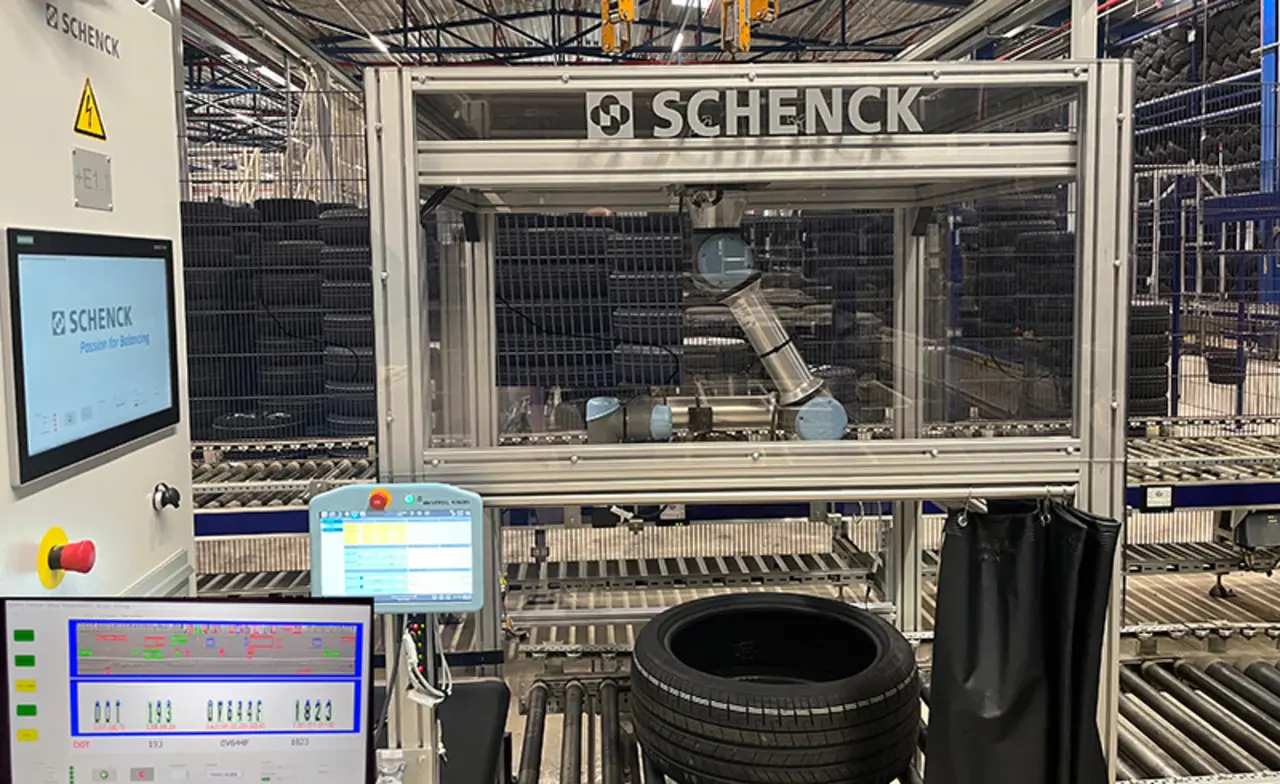
Reconhecimento de componentes, verificação de plausibilidade e leitura do CÓDIGO DOT
-
If production lines must process a wide variety of variants and still ensure that the permissible installation periods for components are adhered to, the components are usually checked or inspected using additional systems in the feed area of wheel production lines.
Schenck supplies the required fully automatic machines for rim design recognition or for reading the tire DOT code, and simultaneously an incoming inspection can be carried out and defective parts are ejected before they enter the production process.Our fully automatic machines offer:
- Rim design recognition
- Tire DOT code reading
- Tire production code reading and verification
- QR code reading on rims
- Tire barcode reading
- Wheel assembly recognition and plausibility check
-
Montagem de válvulas
-
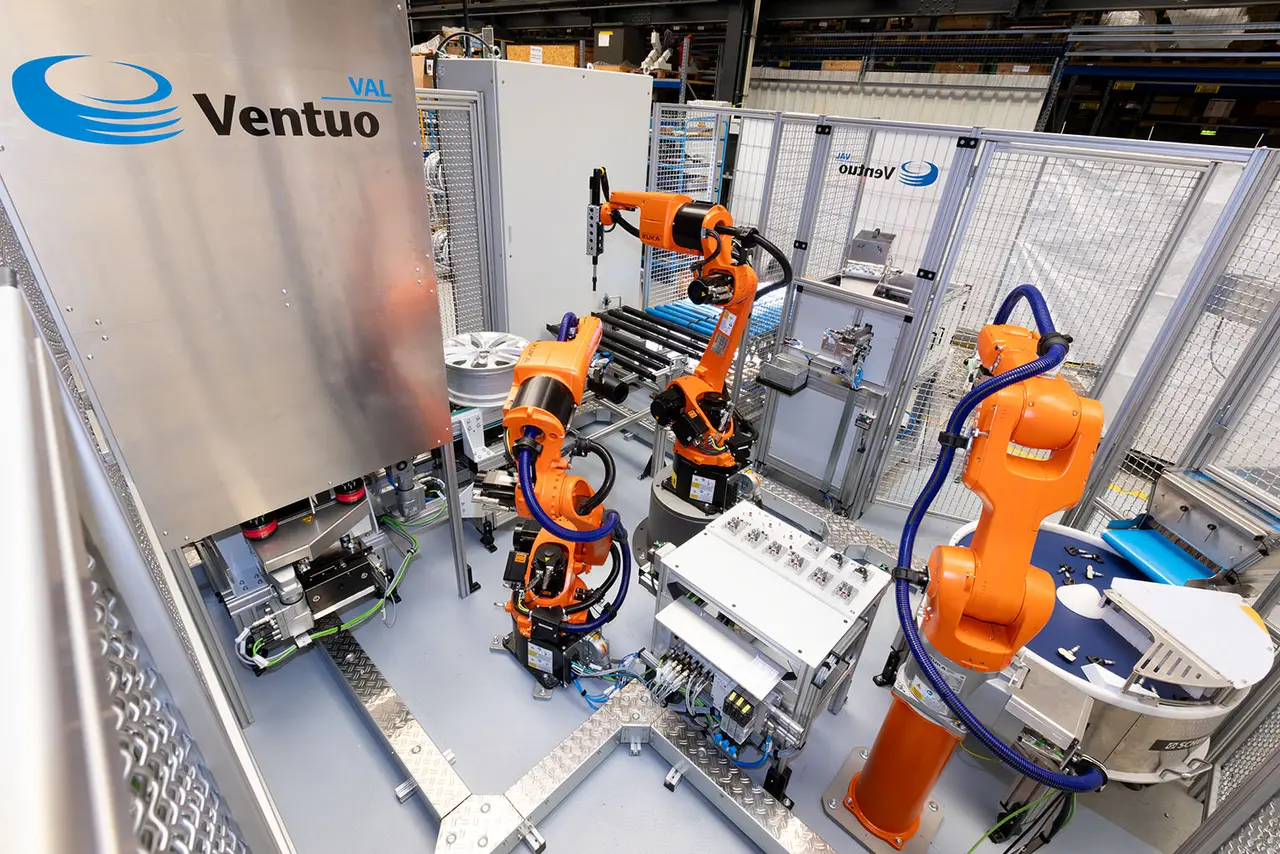
The Ventuo Val offers you new ways in an efficient, state-of-the-art solution for automatic valve assembly for fully automated rim feeding on wheel production lines to automatically process RDK screw valves, RDK snap-in valves, and rubber valves. The heart of the system is the assembly station, where two collaborating robots perform the assembly and screwdriving process. A special gripping system precisely inserts the valves into the valve bore.
- Automatic mixing mode for at least 300 parts per hour
- Processing of rims in sizes 15" to 25" and rim widths from 5" to 14" without retooling
- Modular system for different valve types and rim geometries
- Efficient system without time-consuming teaching of wheel types
- Reliable measurement of the valve bore to compensate for geometric manufacturing tolerances
- Safe mounting, screwing, and attachment of wheel electronics according to manufacturer specifications
- Process data for quality assurance available via network connection
- Flexible adaptation to different layout specifications and future expansions
Further Advantages:
- Use of robotic, innovative vision systems, and AI-based recognition and evaluation algorithms
- Innovative feeding of RDC modules in loose arrangement with bulk material bunker and robot-guided gripping system
- Flexibility in automatic mixed operation thanks to multiple feeding systems
- Cap nuts are fed via vibrating conveyor and bunker system
- Integrated drawer system for economical provision of low-runner valves
-
Máquinas de montagem de rodas
-
To ensure that tires are mounted gently depending on the tire type, we use highly flexible tools and monitor the parameters throughout the entire mounting process. Thanks to traceable process parameters and tool settings, our wheel mounting machines ensure flawless results regularly as part of an automatic wheel mounting line.
Our fully automatic machines offer:
- Flexible coverage of the working area from 14" to 25" in mixed operation
- Type-specific adjustable mounting station for the assembly of standard tires, run-flat and UHP tires, compact emergency tires, or commercial car tires
- Automatic plausibility check of the supplied complete wheel components for active misassembly detection
- Reliable application of lubricant to the rim and tire using a spray system with flow monitoring
- TPMS valve detection and positioning to prevent valve damage during mounting
- 4-point rim clamping for secure and gentle holding of the disc wheel during the mounting process
- Gentle tire mounting thanks to type-specific mounting procedures
- Special Schenck mounting tool with patented automatic radius adjustment of the bead deflector
- Continuous monitoring of the mounting torque with type-dependent limit value specification and graphical representation of the torque curve
Our semi-automatic machines offer:
- Ergonomic, manual loading concept
- Manual application of soap solution
- Compact design for reduced space requirements
- Machine is suitable for mounting run-flat tires
- Electromechanical adjustment and actuation of the mounting tools
- Servo control allows clear parameter documentation of the mounting programs
- Gentle torque-controlled mounting process, especially for wide tires and run-flat tires
-
Máquinas de correspondência de rodas
-
The advantages of this principle are obvious: No additional machine is required thanks to gentle mounting and simultaneous matching without pressing the tire axially and without cycle time influence.
Wheel matching machines offer you a fully automatic solution for optimizing wheel assembly. Traditionally, the geometric values of the disc wheel (rim) are aligned with the tire uniformity parameters by means of targeted rotation, thereby optimizing wheel assembly. The matching process, or the targeted orientation of the two components in relation to each other, can be carried out either before or after tire mounting.Determination of the marking
- In order to perform a matching process, the tires and rims must have corresponding markings or the reference points must be known.
- Using an image processing system, the machine recognizes the tire manufacturer's marking for the radial force variation of the 1st harmonic on the tire sidewall and the rim manufacturer's marking for the geometric low point or high point on the rim.
- After image evaluation, the machine determines the required angle of rotation between the tire and rim to achieve optimal alignment.
- An alternative method is to measure the rim geometrically and relate the match point to the valve, defining this angle information as the angle of rotation once the valve has been detected by an image processing system.
Implementation of optimization:
- The tire, which is already mounted on the rim and not yet inflated, is pressed axially into the deep bed of the rim on both sides by segments preset to the inch size and held there.
- The rim can then be rotated to the previously determined angular position.
- The tire is then inflated with compressed air in the subsequent tire inflation bell.
- Alternatively, the tire can be oriented in the mounting machine using a process patented by Schenck.
- The markings are detected by a vision system inside the machine and superimposed by a robot, or the first tire bead is gently mounted by the robot.
- When mounting the upper, second bead, the points may twist slightly, but this has no adverse effect.
-
Estações de inflação de pneus
-
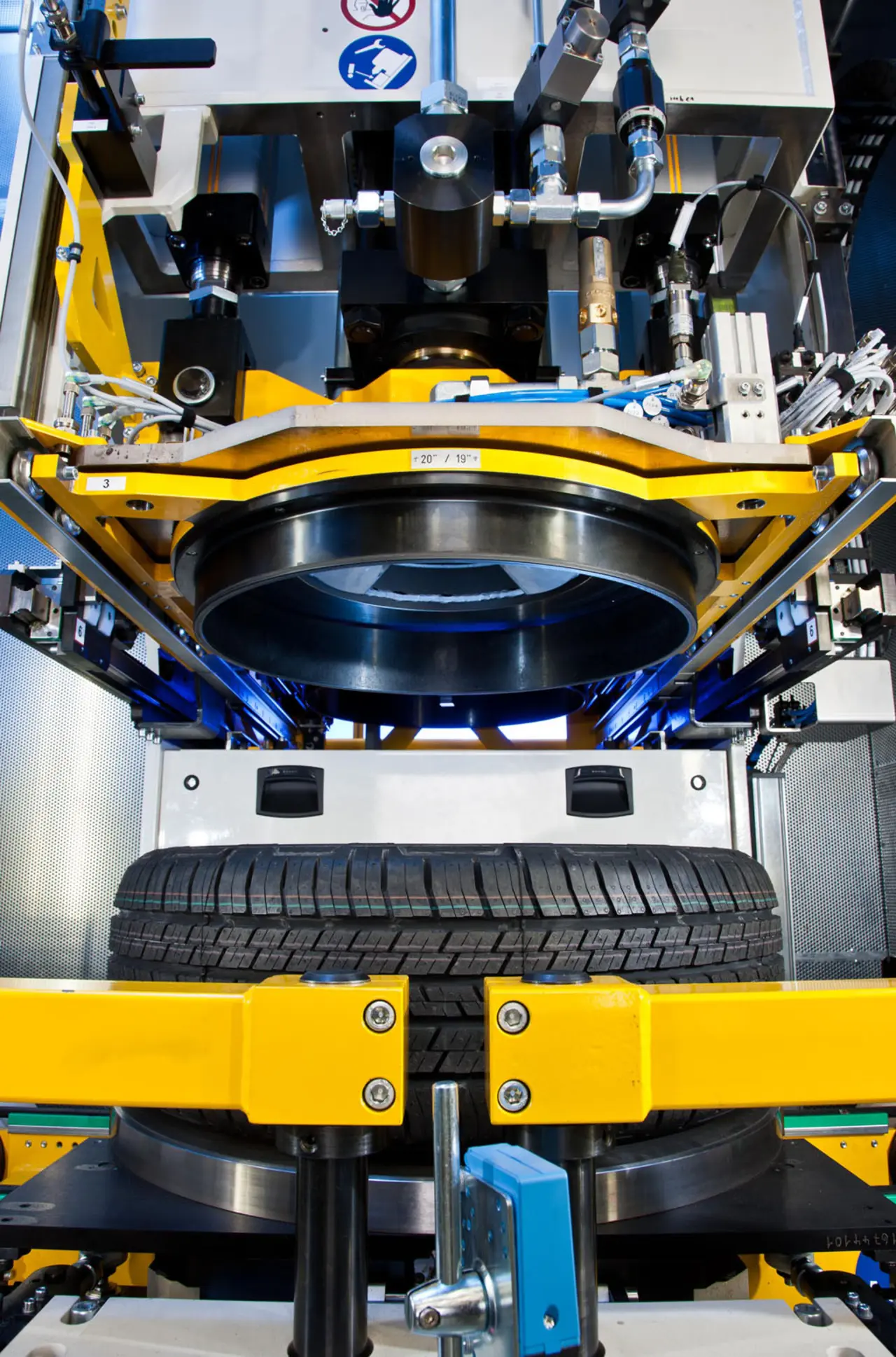
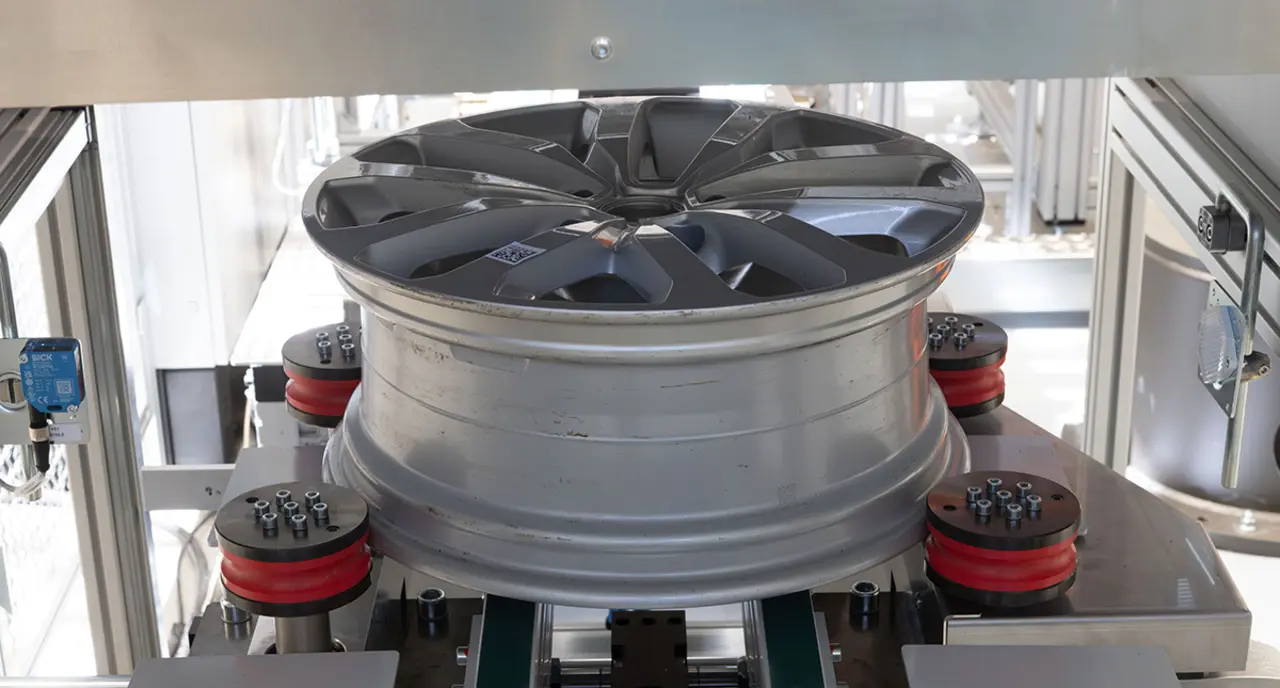
Schenck tire inflation bells are specially designed for inflating passenger car, SUV, and commercial vehicle tires with compressed air. The compressed air is fed into the wheel assembly exclusively via a tire sealing ring and is, therefore, independent of the rim design. The different inflation bells offer varying degrees of flexibility depending on the number of inflation rings installed. In the maximum configuration, up to seven tire sealing rings in different sizes can be used for the appropriate selection depending on the rim geometry and tire sidewall.
Our machines offer:
- Highly flexible working range from 14" to 25"
- Individual filling ring configuration
- Cycle time-neutral filling ring changes in mixed operation thanks to patented filling ring magazine
- Highest filling accuracy
- Shortest cycle times
- Optimized filling and tire setting behavior thanks to our patented support table
- Reduction of compressed air consumption in the filling process through optimization of the filling bell design
- Constant filling pressure adjustment throughout the entire filling process
- Filling bell without rim sealing ring
- Extended working range (up to 7 filling rings)
- Can be used on any rim design, including alloy rims with rimless spoke design
- No axial stress on the A-side of the rims during filling operation
- Automatic function sequence and mixed operation
- Interlinking with production lines
-
Otimização do assento do pneu
-
Our tire seat optimization complements your production and is designed to prevent possible changes in the tire seat under load during driving. Schenck offers various systems for this purpose, which optimize the tire seat by applying load. Depending on the wheel range, different solutions are available.
Whether a system based on conical rollers, a swiveling load wheel, or axial rollers on the tire sidewall is used, this must be determined based on your wheel program. We would be happy to advise you on selecting the optimal system tailored to your needs.
Our machines offer:
- Highly flexible working range from 14" to 25"
- Individual optimization programs can be adjusted depending on the type
- Selected solutions tailored to the respective wheel range
- Automatic function sequence and mixed operation
- Interlinking with production lines
-
Máquinas de medição de uniformidade de rodas
-
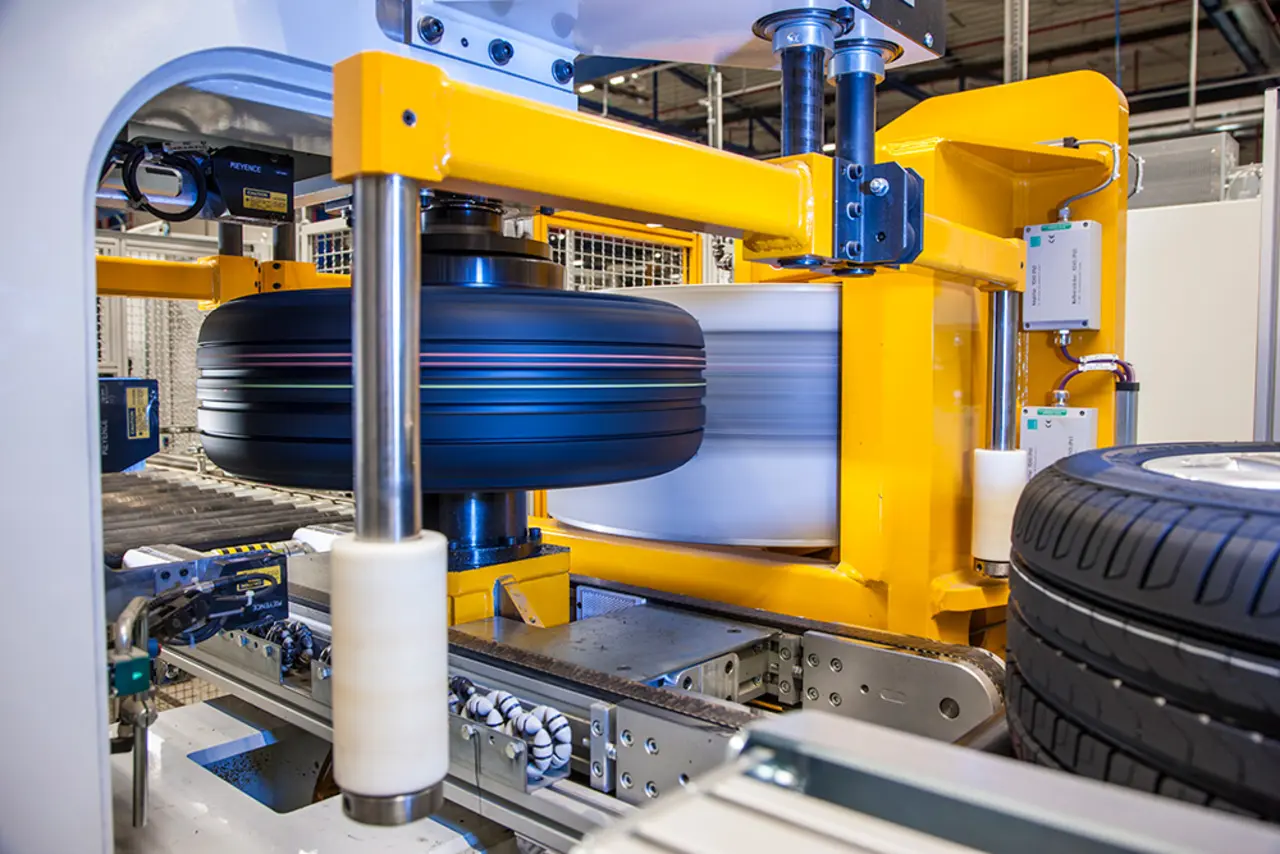
Our wheel uniformity measuring machine (TU machine) checks the uniformity of complete car wheels precisely and reliably. It determines the force restrictions for radial and lateral forces and calculates other variables such as harmonics from these. As part of wheel production lines, they provide the parameters for evaluating complete wheel quality to ensure efficient quality control during the production process.
Our machines offer:
- Highly flexible working range from 14" to 25"
- Test drum diameter 854 mm
- Determination of radial and lateral force fluctuations, static lateral forces, cone and angle effects
- Calculation and analysis of harmonic forces (1st to 10th harmonic)
- Optional laser-based geometry measurement
- TUZ evaluation in conjunction with geometry measurement
- Optional DOT reading
- Shortest cycle times
- Automatic function sequence and mixed operation
- Interlinking with production lines
-
Máquinas de balanceamento de rodas
-
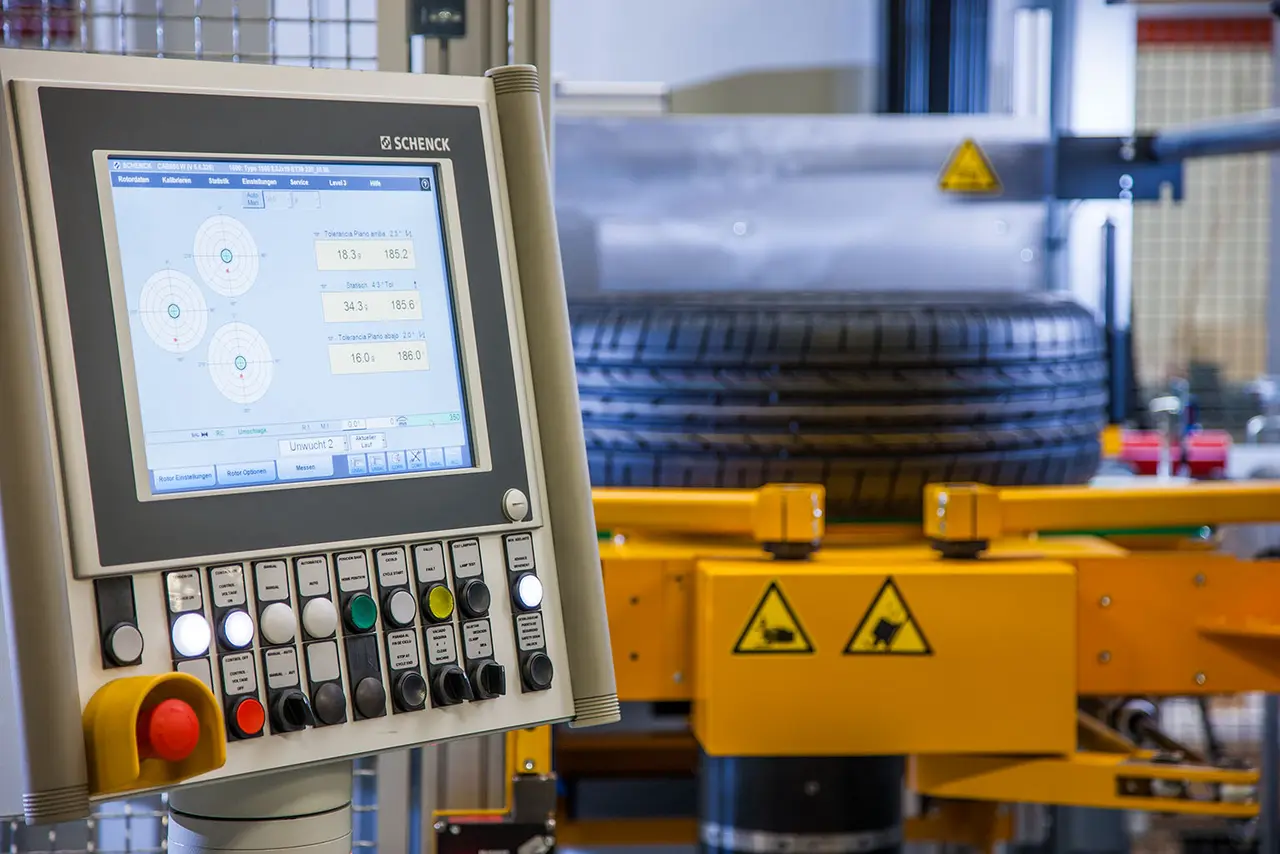
Our fully automatic wheel balancing machines enable cycle times of less than 10 seconds with a working range of 14" to 25". They measure the static and dynamic unbalance of complete car wheels and are suitable for both unbalance compensation calculation and unbalance control measurement.
Our machines offer:
- Fully automatic unbalance measuring machine in modular design that can be used for both unbalance compensation measurement and control measurement
- Innovative PC-based measuring system CAB 950W
- Extensive measurement and evaluation algorithms for the unbalance measurement and control balancing function
- Display and documentation of the measurement results in the balancing and horn planes as well as the static component of the unbalance
- Innovative unbalance measurement system allows “single-master” or empirical calibration
- Working range from 14" to 25"
- Shortest cycle time < 10 s
- Optional marking unit for unbalance marking in both compensation planes
- Ergonomic operating concept
- Integrated protective fence
- Quick and easy commissioning
- No special foundation is required! The Schenck measuring system can be installed on a standard industrial floor with a thickness of 200 mm without a special foundation.
- Schenck single-master calibration allows all wheel calibrations to be recovered with just one master wheel calibration. The specific wheel calibrations are traced back to the geometry data of the master wheel, so that the individual types do not have to be recalibrated
- Automatic reversal error check and calibration during production
- Automatic “self-control” process for checking the machine status during production
- Clamping technology features a low-maintenance sliding sleeve holder for individual clamping diameters, or optional universal, high-precision, and a backlash-free 10-jaw chuck for the clamping range 54 to 84 mm with face pull function for realistic clamping similar to that on the vehicle. (Other clamping ranges are available on request.)
-
Sistemas de compensação de desbalanceamento
-
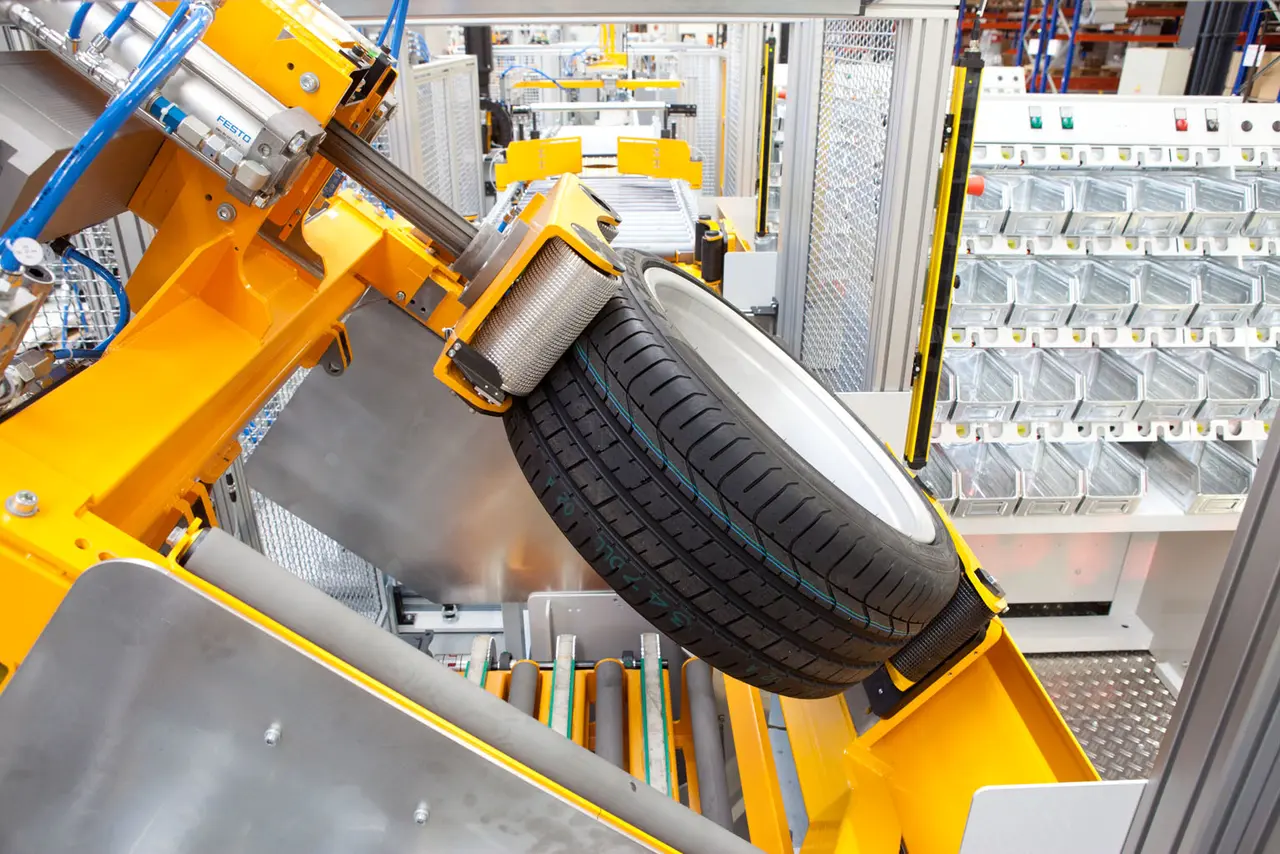
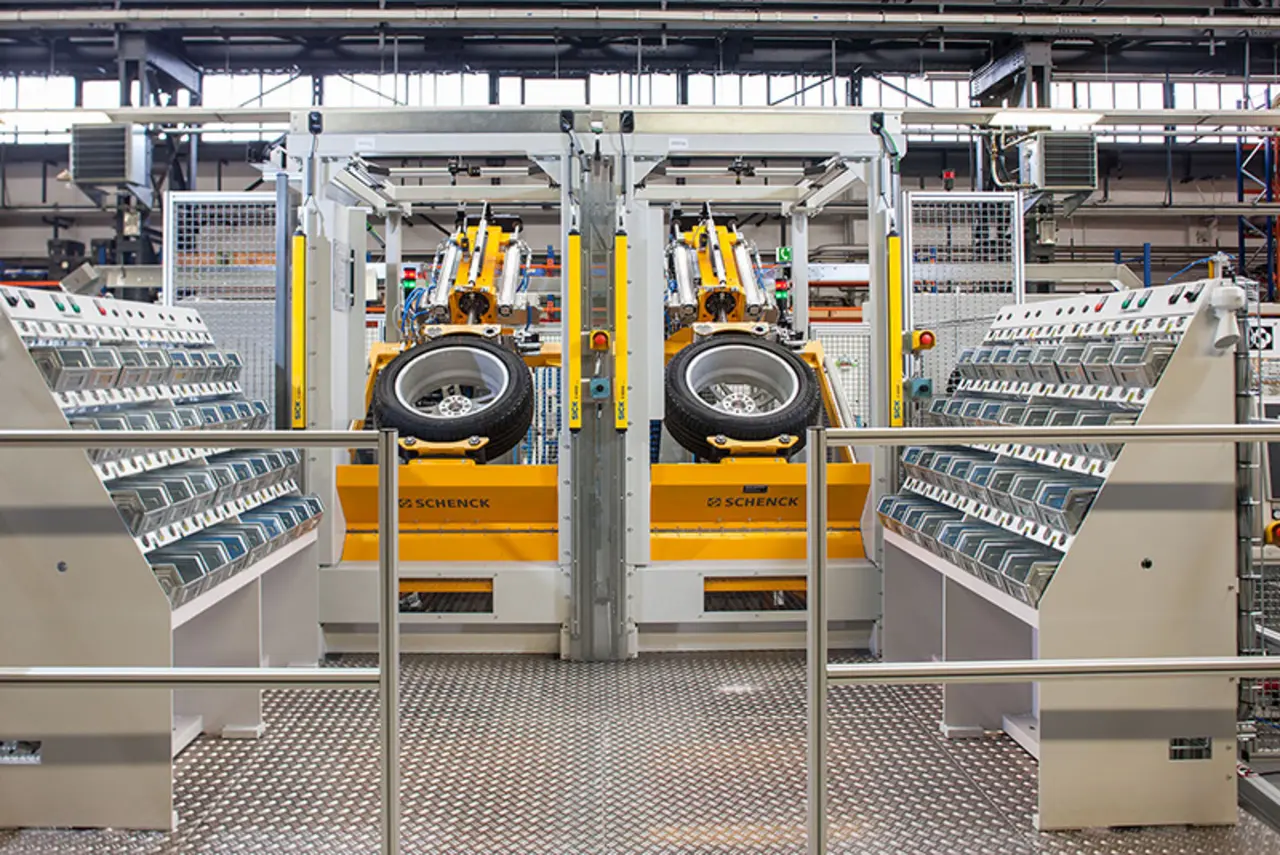
Unbalance compensation systems include manual balancing stations for wheel assembly or rotor-based fully automatic balancing stations for all known types of balancing weights.
Manual balancing stations:
- The manual balancing station is an important component of a wheel balancing machine and is the standard solution in many wheel manufacturing facilities.
- The unbalance compensation values and their compensation positions, which are determined in the measuring system, are assigned to the wheel and transferred to the balancing station.
- The positions of the unbalance compensation are turned in facing the operator.
- The balancing weights to be used, including adhesive weights, 2-piece safety weights, or impact weights, are displayed on a screen and on the weight containers.
- A poka-yoke function supports the pick-to-light display and helps the operator quickly pick up the correct weights.
Fully automatic balancing stations:
- Our fully automatic balancing stations can be integrated directly into a wheel balancing system or operated as a stand-alone unit with its own control system.
- A highly flexible handling robot guides the wheels to the actual balancing device with precise positioning.
- Both 2-piece safety weights and various types of adhesive weights can be processed with defined and monitored contact pressure.
- The precise positioning and pressing process of the balancing weights ensures minimal residual unbalance and reliable bonding of the adhesive weights.
- The balancing systems achieve the shortest cycle times with very high system availability.
The advantages of this principle are obvious: No additional machine is required. Gentle mounting, simultaneous matching without pressing the tire axially and without cycle time influence.
-
Tecnologia de transporte
-
A production line is the connection of individual systems to a complete production system. The supply of tires and rims, recognition of the components and a plausibility check can be taken into account, if necessary. If several lines are linked, there are entry and exit points and the finished wheels are to be kept in a storage system or delivered directly in sequence to the final assembly, the entire system quickly becomes complex. At the same time, the individual systems transfer the quality and production data to higher-level MES systems for complete traceability of the wheel parameters for quality assurance. With our many years of experience in the implementation and processing of greenfield systems, we are available to provide you with advice and support. We transport tires, rims and fully assembled wheels reliably, damage-free and efficiently.
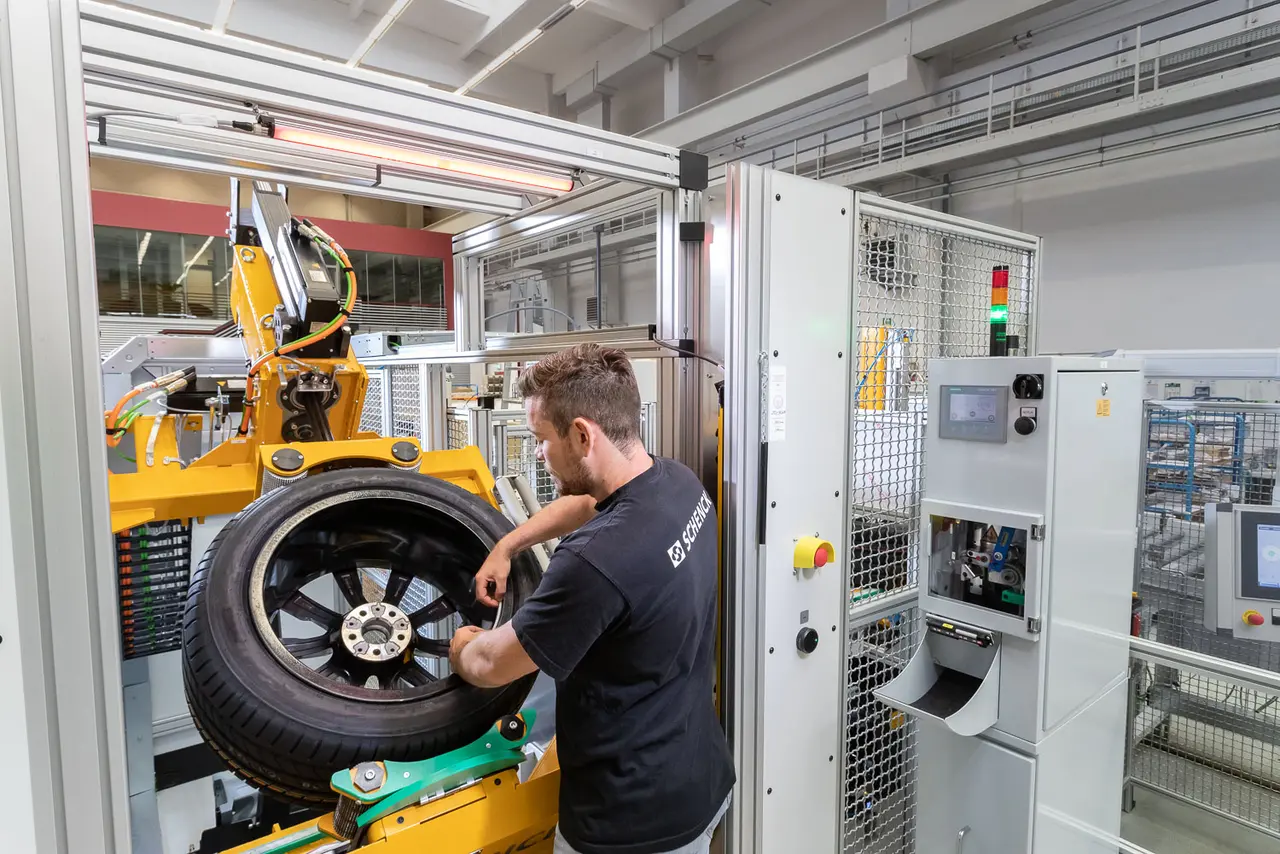
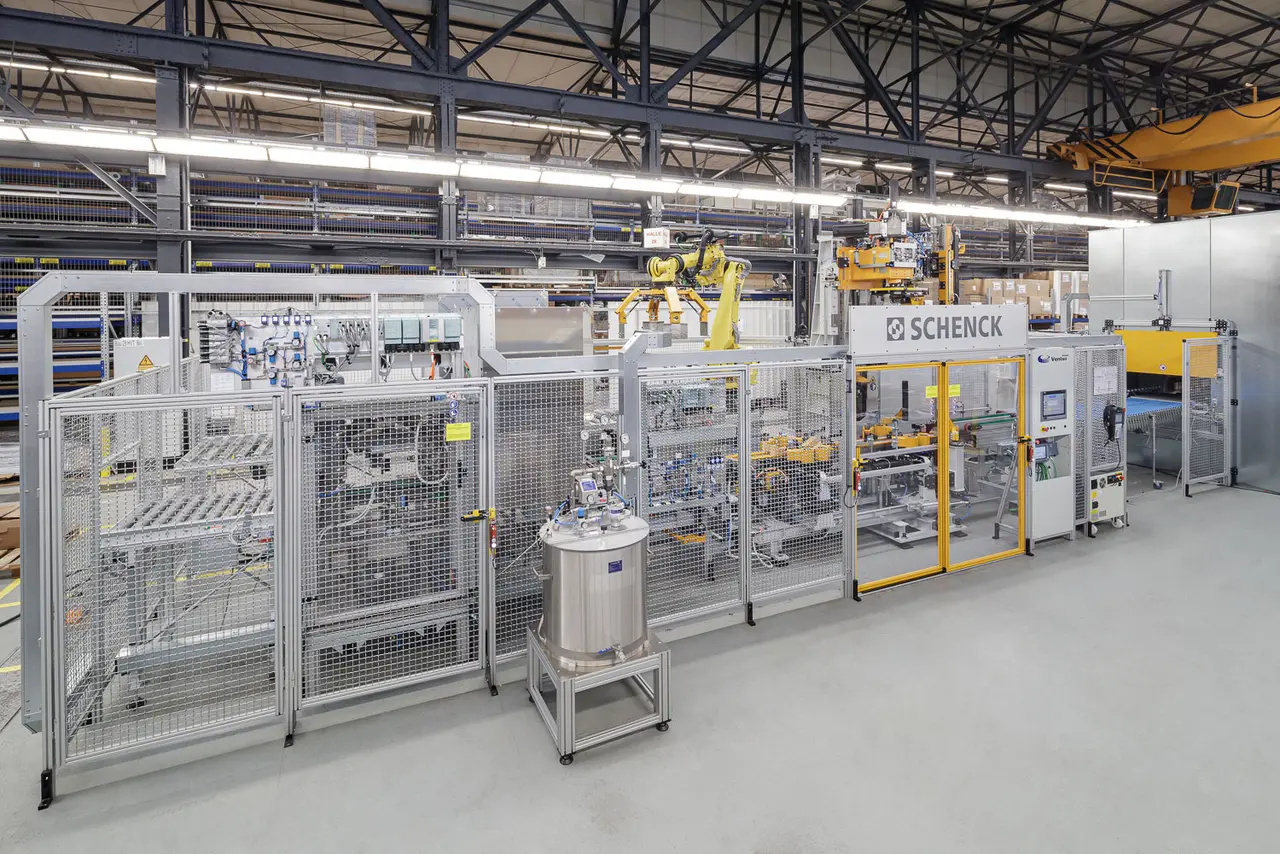
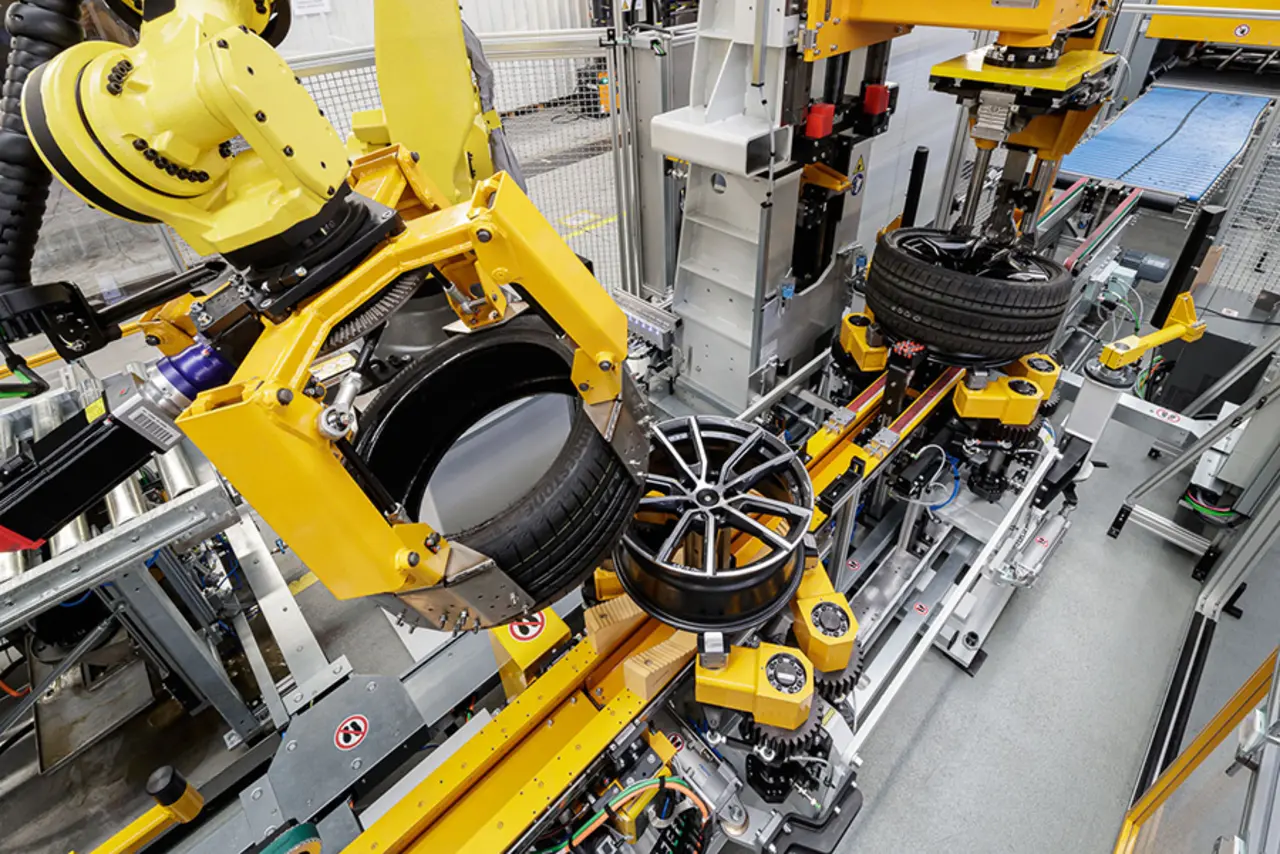
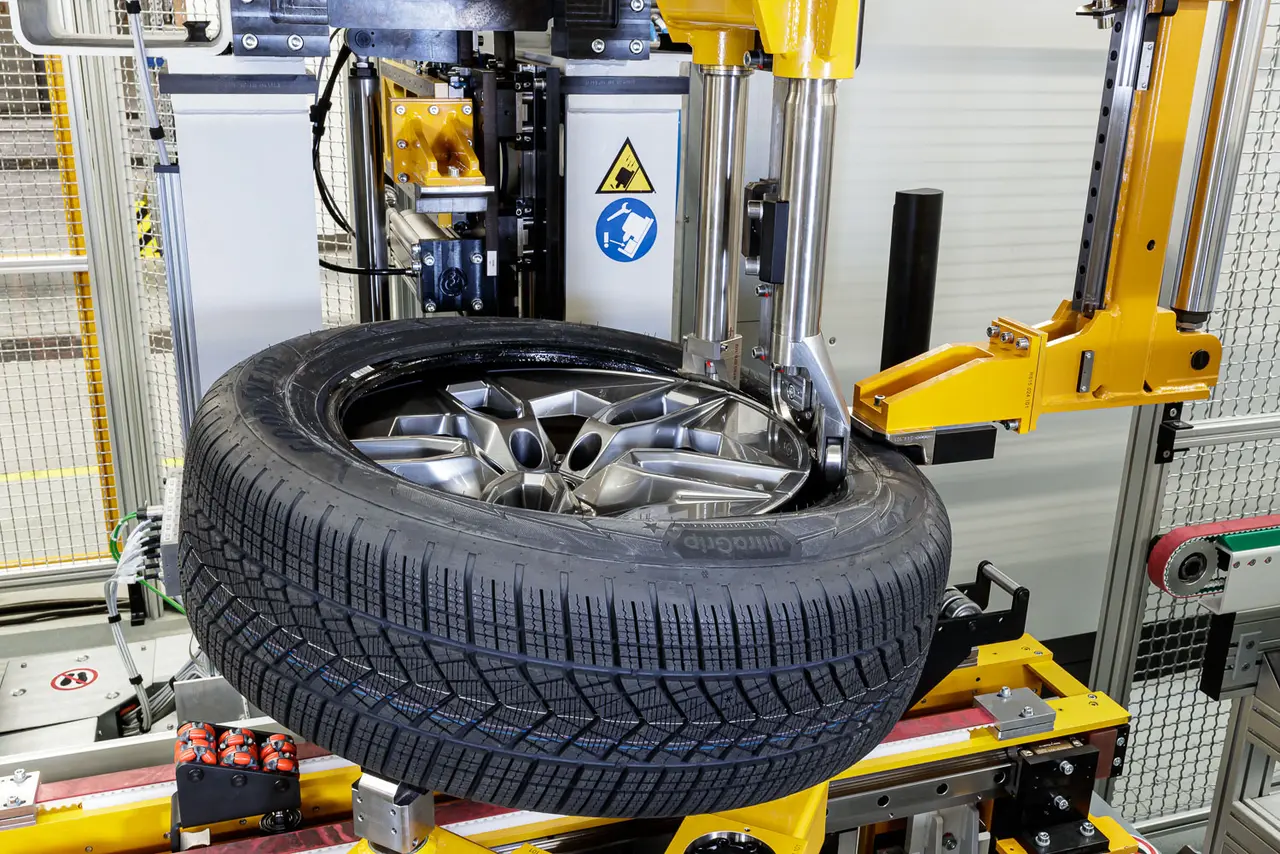
Galeria de imagens Visão das soluções completas Schenck para montagem de pneus
Serviço da Schenck
Alguma dúvida?
Teremos todo o prazer em ajudá-lo!