Axle Drives
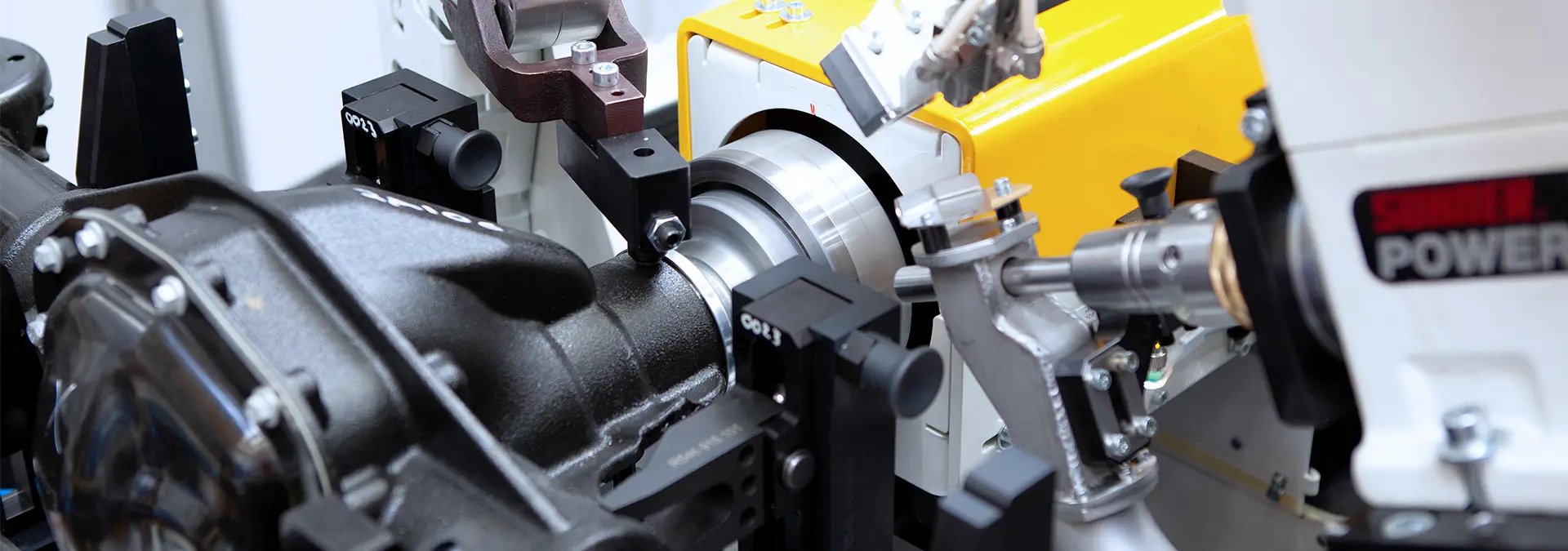
With our balancing machines for front and rear axle transmissions, the measured unbalance is corrected by drilling into the drive flanges of the transmissions (welding optional). We support you with our interdisciplinary expertise in the production of front and rear axle transmissions from the initial idea to the design stage through to series production.
Variable concepts for better results
Customized individuality
Automated solution for gearbox balancing
Advantages of Schenck balancing machines for axle drives
High precision
Ensuring precise balancing for optimum running quality and low vibrations
Automated correction
Fully automatic unbalance correction by drilling without manual intervention
Easy integration into your production
Low space requirement, efficient use of space and optimum accessibility
High measuring accuracy
Precise detection and correction of unbalances to extend the service life of gearboxes
Cost efficiency
Reduction of rejects, rework and material loss is thanks to precise balancing.
Short cycle time
Thanks to precise measurements and efficient equalization calculations, short processing times of up to 45 s are achieved.
Versions of Schenck balancing machines for axle drives
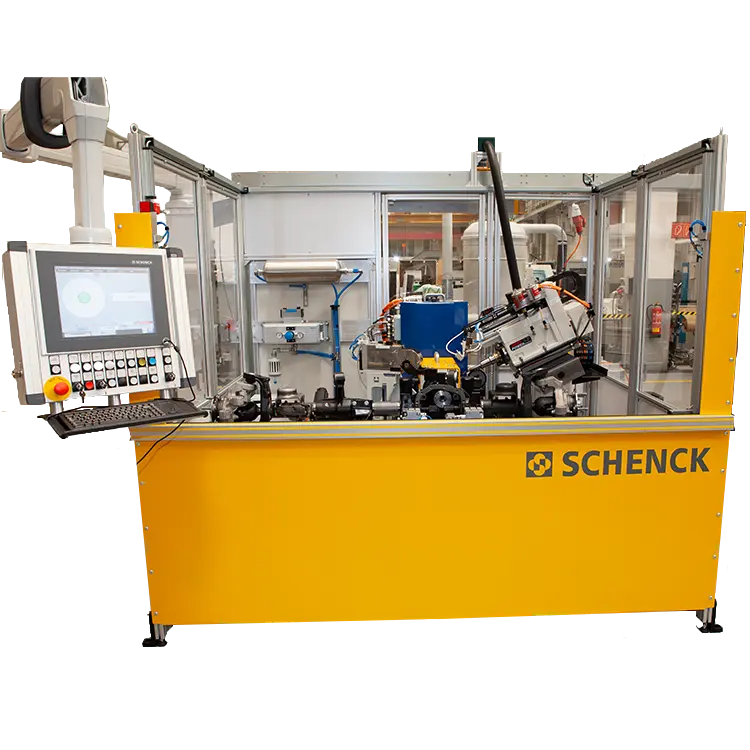
Axle Drives
Fully automatic
Semi-automatic
Production line
SBAL
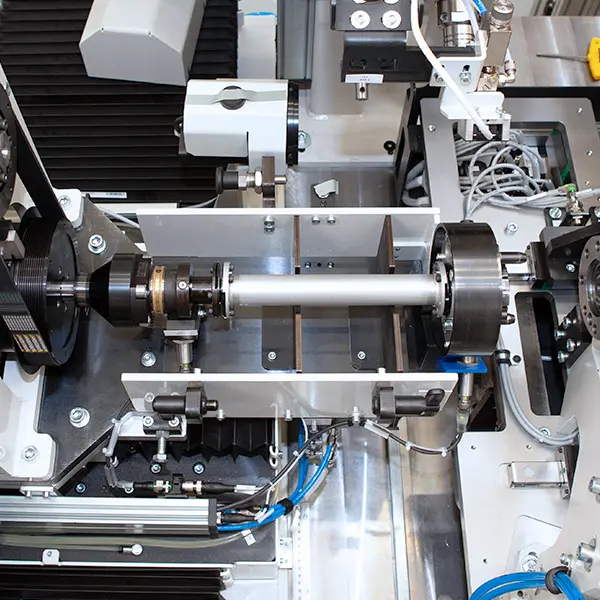
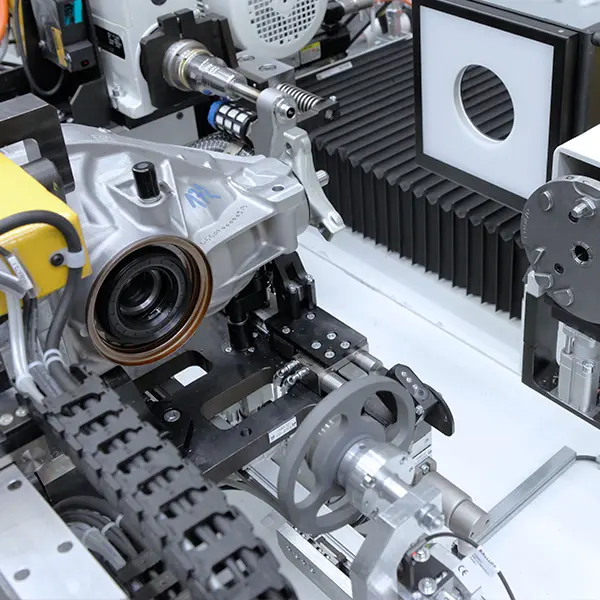
The SBAL balancing machine for axle drives is a production line-capable solution with fully automatic unbalance correction. It is specially designed for the efficient measurement and precise correction of unbalance in front and rear axle transmissions. The measurement is performed between 1000-3500 min-¹, depending on the axle type, to ensure accurate results and minimize stress on the system. With this technology, up to 80 axle drives can be produced per hour, ensuring high productivity and efficiency.
- Maximum rotor weight: up to 250 kg
- Spindle speed: 1000 to 3500 min -¹
- Measurement uncertainty: 5 to 50 gmm (depending on rotor)
- Output: approx. 40-80 pcs/h
Downloads
Worth knowing
-
Technical details
-
Machine design is optimally adapted to the task. Machine assemblies are arranged according to ergonomic aspects.
- Single or two-station machine
- Cycle time: 45 to 90 seconds
- Measuring uncertainty: approx. 5 to 50 gmm
- Software: CAB 950
- Unbalance correction is fully automatic by drilling or optional welding
-
Areas of application
-
SBAL
- Automotive components in the automotive industry and supplier industry
- Front and rear axle gearboxes
- Use in high-volume production processes with high balancing quality and cycle time requirements for all product families
- Low-speed and high-speed measurement of unbalance possible at 1,000 to 3,500 min-¹
-
Special features
-
SBAL
- Very high balancing quality requirements
- Low cycle times
- Local service expertise worldwide
- Welded machine bed in special design
- Subcritical and supercritical bearing pedestals with balancing subframes customized to the respective gearbox
- Pneumatic gearbox clamping units hold the gearbox during the balancing process
CAB 950
Intelligent technology for precision, efficiency and flexibility
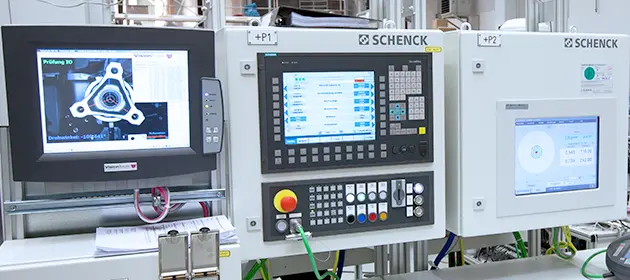
Advanced measurement and equalization technology
The CAB 950 measuring software is the benchmark in terms of productivity, quality and flexibility for axle drives with extensive functions for determining measured values, compensation calculation and control. Should operator intervention ever be required, the CAB 950 also impresses with a reliable operating system and a graphically optimized user interface that is easy to read and intuitive to operate via an active touch screen.
CAB 950 with expandable functions
Equipped with a modular software structure and powerful hardware with a wide range of interfaces, the CAB 950 offers significantly expanded storage and communication options as well as technological freedom for the future.
Diagnostics and statistics software for optimum process control
CAB 950 features digital signal processing and software modules for various equalization methods. A large data memory, user-friendly controls, photo-guided retooling and diagnostic and statistical software, ensure precise, efficient processes. An external interface enables flexible integration.
Service from Schenck
Any Questions?
We'll gladly help you!