World market leader for balancing solutions
Call us
+65 (0) 9117 2252
Any service related questions?
Call us
+65 (0) 6481 8680
Turning good products into excellent products – this is our passion and our promise: our technologically leading balancing solutions facilitate safe, resource-efficient manufacturing of products used by billions of people every day. Find out more about us and our success story.
About us
What we stand forBalancing means high productivity, long service life and lived sustainability. Because precisely balanced parts work more efficiently, thus saving valuable resources. This applies equally to precision dental turbines or car steering wheels, aircraft engines or power plant turbines.
We take this responsibility very seriously and guarantee uncompromising quality, sustainable solutions and comprehensive service throughout the entire service life of your product.
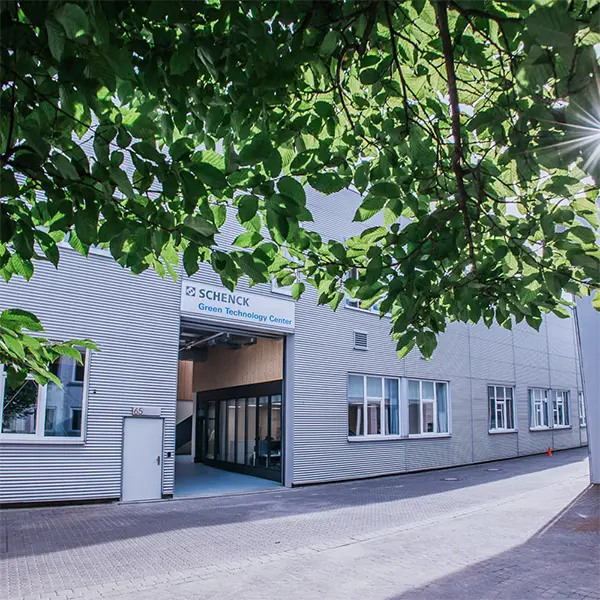
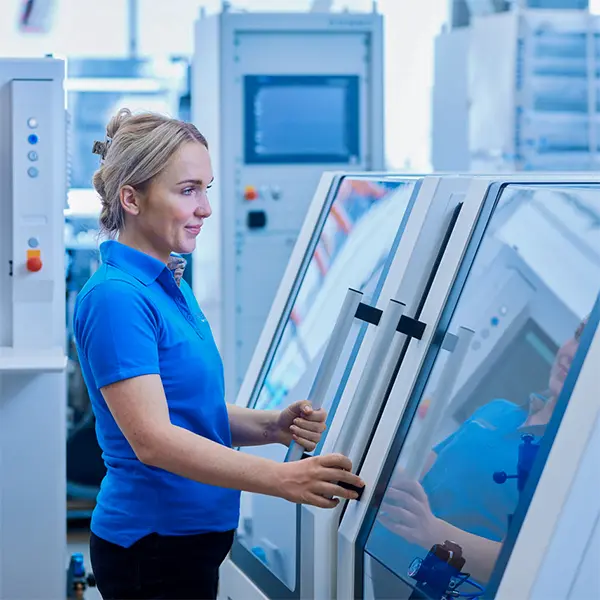
What makes us particularly proud: our solutions for all components and armatures are globally unique. We offer balancing machines and software solutions for all weight classes and every size – from wheel assembly to diagnosis technology, from the repair workshop to mass production.
In combination with our experience from nearly 150 years of company history and our sites in 54 countries all over the world, this makes us the leading partner for industry and the skilled trades.
Schenck RoTec GmbH
Facts about us
Our history
From pioneer to global playerOn October 1, 1881, Carl Schenck founded his “iron foundry and weighing machine factory” in Darmstadt, which is now Carl Schenck AG. As early as 1863, “Commerzienrat Carl Heinrich Johann Schenck” had co-founded the Mannheim-based company “Schenck, Mohr & Elsässer,” where automotive pioneer Carl Benz also worked as a technical employee.
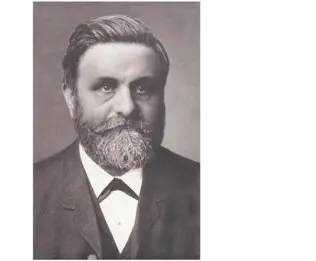
In 1881, Carl Schenck left the Mannheim company and founded his own weighing machine factory in Darmstadt. His prudence, international orientation, and presence at world exhibitions ensured early success and a healthy order book for the young Darmstadt-based company. Thanks to this dynamic development, the company began developing and producing balancing machines in 1907.
Carl Schenck, who had been working intensively on the subject of “balancing,” signed a license agreement in 1908 with Lawaczeck, who was the first to develop a usable solution for a “balancing machine.” In 1915, Schenck acquired the exclusive license for the entire world. The “Lawaczeck principle” remained in use until the 1940s.
During this phase, a number of other optical and mechanical measuring methods were developed that offered astonishingly high measuring accuracy. The “Lawaczeck design” achieved a balancing accuracy of 0.001 mm center of gravity displacement. This would still be sufficient for many applications today.
In 1935, a change was on the horizon – thanks to a machine patented in the USA with electrodynamic vibration sensors and stroboscopic imbalance angle determination.
In 1942, Schenck filed a patent for a “method and device for dynamic balancing by determining the angular position of the imbalance using a curve recorded periodically on an oscilloscope screen.” This first production-ready solution was successfully used to balance ship gyroscopes during World War II due to its measuring accuracy.
The wattmeter method, the next step in the development, suppressed undesirable parasitic vibrations. With the basic components known at this time, i.e. wattmeter, vibration sensor and angle reference generator, it was possible to determine the position and magnitude of the unbalance in one measuring run. Unbalance values were displayed on two pointer instruments.
In 1953, the light spot vector meter brought further improvement. The combination of both values in one display and the “storage” of the measured values by a light spot on the screen simplified balancing. The imbalance was now visible. Even today, the vector meter is still a proven method for displaying the position and size of the imbalance in modern screen measuring devices.
Parallel to the development of “workshop machines” – today referred to as universal machines – the automation of balancing continued to advance. “Balancing machines” for crankshafts determined the imbalance and specified the drilling depth for the drill machines to compensate for it. The measurement run, compensation, and control run took about 2 minutes for a crankshaft.
The mechanical foundations for balancing were laid in the 1970s. Electronics slowly conquered balancing and diagnostic technology. In 1971, the electronic, wattmetric measurement method was introduced. The first computer-controlled balancing systems were introduced in 1974.
The next major change came with the advent of digital technology: from the early 1980s onwards, computers with microprocessors also conquered measurement technology and continue to dominate it to this day. Starting with the CAB 690 and CAB 720, today the CAB 820 and CAB 920 represent the fourth generation of measurement technology in service.
In 1995, as part of the restructuring of Carl Schenck AG, the balancing and diagnostic technology divisions were merged to form an independent company – Schenck RoTec GmbH.
From a technical perspective, one of the most impressive highlights of this period was the creation of the world's largest geotechnical centrifuge for soil physics research. The CRYO centrifuge, which is used to further develop components of the Ariane 5 rocket engine at temperatures close to absolute zero, broke new technological ground.
In 2000, the globally active technology group DÜRR AG, based in Stuttgart, acquired a majority stake in Carl Schenck AG.
Energy saving, noise reduction, and efficiency improvement were the predominant themes of the first decade of the new century. In 2009, the testing laboratory for balancing technology received official accreditation from the German Accreditation Body for Technology (DATech). For the first time, users and service providers can have their testing equipment and measurement technology certified in a manufacturer-neutral manner – documentable and traceable to international SI units.
Schenck Machinery was established in the USA as an independent company in 1964. In the same year, Schenck began collaborating with Micro Balancing, a balancing machine manufacturer founded in 1946, which supported Schenck in daily operations.
After acquiring the assets of Micro Balancing in 1967, Schenck merged both companies into Schenck Manufacturing Corporation. One year later, in 1968, Schenck acquired the German company Trebel, originally founded in 1910 as a grinding wheel manufacturer and later specialized in balancing machines. This acquisition led to the formation of Schenck Trebel Corporation (STC) with headquarters in Farmingdale, New York.
In 1974, Schenck Trebel Corporation relocated its headquarters from Farmingdale to its current location in Deer Park, New York. This move marked an important milestone in the company's development.
In the following years, Schenck continued its expansion strategy in the USA. In 1984, Turner Brothers Incorporated from Lake Orion, Michigan, was acquired and renamed Schenck Turner Inc. This company specialized in balancing systems for the automotive industry. Two years later, in 1986, the Pegasus Company from Troy, Michigan, was acquired and became Schenck Pegasus Corporation, manufacturing testing equipment for the automotive sector.
In 1987, Schenck Corporation (SCO) was established as a holding company to consolidate all North American operations. The offices remained in the Schenck Trebel building in Deer Park, NY. Under SCO, Schenck Trebel, Schenck Turner, and Schenck Pegasus were united. In 1994, SCO acquired Schenck Accurate (SAR) from Whitewater, Wisconsin. Since then, the company has grown from a small manufacturer to a major supplier of conveying and measuring technology, including volumetric and gravimetric feeders, Coriolis flow meters, and other specialized systems.
In 1998, Carl Schenck AG in Germany underwent a comprehensive restructuring and founded the Schenck RoTec GmbH division, which consolidated all balancing and diagnostic activities. In 1999, Interautomation Inc. from Oakville, Ontario, Canada, became part of the Schenck Group, specializing in engine and vehicle test systems. In the same year, Dürr AG from Stuttgart acquired Carl Schenck AG in Darmstadt, Germany. In 2003, Schenck Turner was renamed Schenck RoTec Corporation and moved its balancing service operations to Troy, Michigan. Further relocations in Michigan followed in 2010 (Auburn Hills) and 2016 (Southfield). In 2005, Dürr AG sold the Development Test Systems Group, including Schenck Pegasus and Interautomation, to Horiba (Japan), as well as the Measuring and Process Technology Group, including Schenck Accurate, to a German private equity firm.
In 2017, Schenck expanded its capabilities by acquiring a consulting and testing service provider with complementary expertise in various industries. This acquisition strengthened Schenck USA's position as a versatile provider of testing and consulting services.
The strategic consolidation continued in 2020 with the completion of the merger of all US Schenck entities into Schenck USA Corporation. This step was part of the "ONE Schenck USA" strategy, aiming to combine strengths in North America, leverage synergies, and create a unified market presence.